.svg)



Learn how SOC 2 compliance works, including SOC 2 requirements, SOC 2 certification, the SOC 2 audit process, and SOC 2 vs ISO. Get actionable steps now.

July 2, 2026
.avif)
.avif)
.avif)
What we keep hearing from businesses is how easy it is to overlook the details of SOC 2 compliance until a client asks for proof. Many teams think they’re covered, only to find gaps when it’s time for a SOC 2 audit or to produce a SOC 2 report.
SOC 2 compliance is a set of standards that show your service organization takes data security and privacy seriously. Industry research shows that more than half of companies underestimate the time and effort needed to prepare for a SOC 2 audit. The main goal is to build trust with your customers by meeting the trust service criteria and following a clear compliance checklist. Developed by the American Institute of Certified Public Accountants, SOC 2 helps you prove that your systems and processes protect sensitive information. If you want to achieve SOC 2 compliance, it’s important to understand the requirements, the two types of SOC 2 reports, and how the SOC 2 compliance checklist fits into your overall security plan.
SOC 2 compliance is more than just a box to check—it’s a way to show your clients that you take data protection seriously. The SOC 2 standard was developed by the American Institute of Certified Public Accountants (AICPA) to help service organizations prove they follow strict security and privacy rules. If your business stores, processes, or transmits customer data, you’ll likely be asked for a SOC 2 report at some point.
The SOC 2 requirements focus on five trust services criteria: security, availability, processing integrity, confidentiality, and privacy. These criteria help you build reliable systems that keep sensitive data safe. Following a SOC 2 compliance checklist makes it easier to prepare for an audit and address any gaps in your controls. By achieving SOC 2 compliance, you can stand out in the market and build stronger relationships with your clients.

Getting ready for a SOC 2 audit can feel overwhelming, but breaking it down into steps helps. Here are some key areas where businesses often run into trouble—and how you can avoid them.
Many organizations jump straight into the SOC 2 audit without a readiness assessment. This step helps you spot gaps in your current controls and gives you time to fix them before the formal audit begins. Skipping it can lead to delays and extra costs.
The trust service criteria are the backbone of SOC 2. If you don’t fully understand what’s required—like security or privacy controls—you might miss important details. Take time to review each criterion and map your controls to it.
A complete SOC 2 compliance checklist includes thorough documentation of your policies and procedures. Auditors need to see proof that your controls are working, so keep records up to date and organized.
SOC 2 compliance isn’t just an IT project. You’ll need input from HR, legal, and operations teams. Make sure everyone knows their role in the audit process.
Some companies think SOC 2 compliance is done after the first audit. In reality, you need to maintain your controls and update your compliance checklist regularly to stay compliant.
There are two types of SOC 2 reports: Type 1 (point in time) and Type 2 (over a period of time). Make sure you know which one your clients need and prepare accordingly.
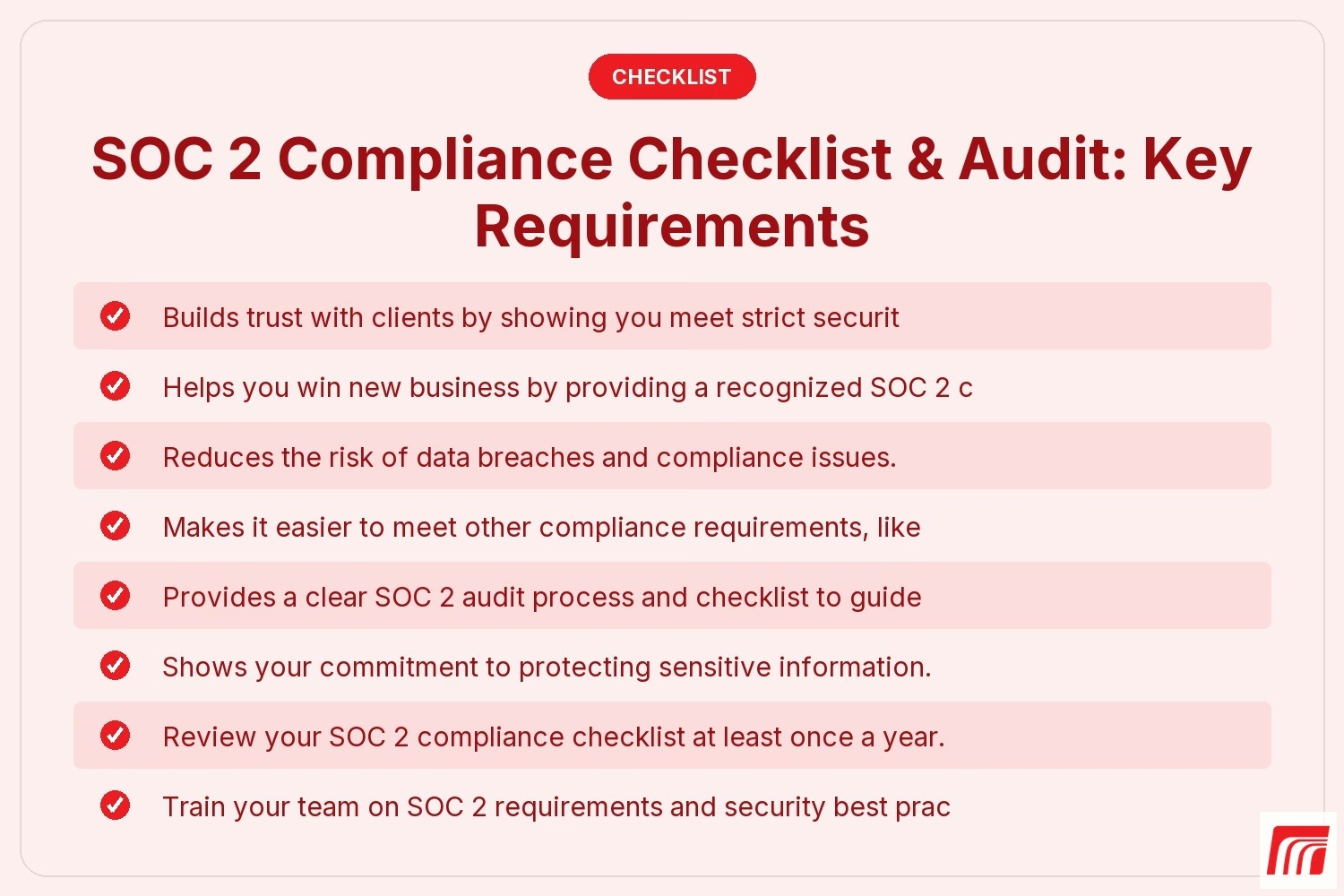
Achieving SOC 2 compliance offers several important advantages:

Meeting SOC 2 compliance requirements means following a set of controls that cover security, availability, processing integrity, confidentiality, and privacy. These are known as the five trust services criteria. Each criterion has specific controls and policies you need to put in place.
The SOC 2 compliance checklist helps you track your progress and make sure nothing is missed. It’s important to review your controls regularly and update them as your business grows or changes. The SOC 2 audit process checks that your controls are working as intended, so keeping everything documented and up to date is key.
SOC 2 certification is not a one-time achievement. You’ll need to maintain your controls and be ready for regular audits to prove ongoing compliance. This helps you stay ahead of new risks and keep your clients’ trust.
There are two main types of SOC 2 reports, and choosing the right one depends on your clients’ needs and your business goals. Here’s what you should know.
A SOC 2 Type 1 report looks at your controls at a single point in time. It shows that you have the right policies and procedures in place, but it doesn’t prove they work over time.
A SOC 2 Type 2 report covers a period of time, usually 3-12 months. It shows that your controls not only exist but also work as intended over time. Many clients prefer this type of report.
SOC 1 focuses on financial reporting controls, while SOC 2 looks at data security and privacy. If your clients care about how you handle their data, they’ll likely ask for SOC 2.
A SOC 3 report is a simplified, public version of the SOC 2 report. It’s useful for marketing but doesn’t include the same level of detail as a full SOC 2 report.
Any service organization that handles customer data—like SaaS providers or IT companies—may need SOC 2 compliance. It’s especially important if your clients are in regulated industries.
Auditors check that you meet the SOC 2 compliance requirements, including having strong controls, clear documentation, and regular monitoring. They’ll use your compliance checklist to guide their review.
Being SOC 2 compliant means more than passing an audit. You need to keep your controls current and respond to new risks as they arise.

Start by assigning a project lead to manage your SOC 2 compliance efforts. This person should coordinate with IT, HR, and other departments to complete the SOC 2 compliance checklist. Make sure everyone understands their responsibilities and the importance of following the controls.
Next, review your current policies and procedures to see how they match up with the SOC 2 requirements. Use the checklist to identify any gaps and create a plan to address them. Regular training and communication help keep everyone on track.
Finally, schedule regular reviews and updates to your controls. The SOC 2 audit process is ongoing, so staying organized and proactive will make future audits easier and help you maintain your SOC 2 certification.
Keeping your SOC 2 compliance up to date is an ongoing effort. Here are some best practices to help you stay on track:
Staying proactive helps you avoid surprises and keeps your business ready for any compliance challenges.
Are you a business with 20 or more employees looking to achieve SOC 2 compliance? If you’re growing fast, it’s easy to miss important steps or get overwhelmed by the SOC 2 audit process. Our team understands the unique needs of businesses like yours and can guide you through every stage.
We help you build a strong SOC 2 compliance checklist, prepare for audits, and maintain your controls year after year. If you want to stand out with a trusted SOC 2 certification, contact us today to see how we can support your journey.
SOC 2 compliance is a set of standards that help service organizations protect client data and prove their security controls are effective. Achieving SOC 2 compliance builds trust with clients and can be a requirement for working with larger companies. The SOC 2 audit and SOC 2 report provide independent verification that your systems meet industry standards.
To achieve SOC 2 compliance, you’ll need to follow a checklist that covers security, availability, processing integrity, confidentiality, and privacy. This process helps you identify and fix gaps in your controls, reducing the risk of data breaches and compliance issues.
The SOC 2 audit process starts with a readiness assessment to identify gaps in your controls. An independent auditor then reviews your policies, procedures, and evidence to ensure you meet the SOC 2 requirements. The audit results in a SOC 2 report that you can share with clients.
During the audit, you’ll need to provide documentation and answer questions about your systems. The checklist helps you stay organized and ensures you don’t miss any important steps.
SOC 1 focuses on controls related to financial reporting, while SOC 2 looks at data security, privacy, and other trust service criteria. If your clients are more concerned about how you handle their data, they’ll likely ask for SOC 2 compliance.
Some organizations may need both SOC 1 and SOC 2 reports, depending on their services and client requirements. Reviewing your clients’ needs will help you decide which report is necessary.
A SOC 2 compliance checklist covers all the controls and documentation needed to meet the SOC 2 requirements. This includes policies for security, availability, processing integrity, confidentiality, and privacy.
The checklist also helps you track progress, assign responsibilities, and prepare for the SOC 2 audit. Keeping it up to date ensures you’re always ready for client requests or audits.
Most organizations perform a SOC 2 audit annually to maintain their SOC 2 certification and prove ongoing compliance. Regular audits help you catch changes in your environment and address new risks.
Staying on top of the audit schedule shows clients you’re committed to maintaining high standards and following the latest compliance requirements.
SOC 2 compliance helps you build trust with clients, win new business, and reduce the risk of data breaches. It also makes it easier to meet other compliance requirements and stand out in competitive markets.
By following the SOC 2 compliance checklist and maintaining your controls, you show clients and partners that you take data protection seriously and are committed to ongoing improvement.